A method, not a prompt.
Six phases. Twenty-seven frameworks. Each engagement moves through Understanding → Synthesis in a repeatable shape.

Ghost is the operating system Angry Gods strategists use to run brand-strategy engagements — one canonical method, one opinionated tool-belt, one voice. Built over 18 months, used on every Tier-1 engagement since March 2025.
Most of them are a blank chat box pointed at a brand. Ghost is the opposite: a shaped, opinionated workspace with a method underneath, canon behind it, and a strategist in the seat.
Six phases. Twenty-seven frameworks. Each engagement moves through Understanding → Synthesis in a repeatable shape.
Every claim cites a source. Every approved artefact becomes citable canon for the next engagement. The library compounds.
Ghost proposes, the strategist approves. Nothing leaves the system without a verdict. The craft stays human.
Model, thinking budget, sources, time — every artefact carries its full production record. Nothing is opaque.
What Ghost actually looks like, in flight. These are the working surfaces — the canvas, the canon, the tool output, the palette.
The engagement canvas is where the work happens. Threaded conversation on the left, live inspector on the right. Every tool call streams in place, with its model, thinking budget, and citations visible as it writes.
Ghost has twenty-seven first-class frameworks — not templates, not prompts, instruments. Each is ranked by phase and outcome. Approved artefacts from past engagements are citable by the next.
When Ghost writes, it shows its work. Every tool output carries its production record — model, thinking budget, sources, time — and cites the specific passages that shaped it. Nothing is opaque; nothing is unapprovable.
“The founders entered this market through lived experience, not through theory.”
“White space: ally posture, category-literate, design-first.”
“Built by people who were doing the work before they named it.”
Everything in Ghost is reachable from a single palette. Jump between brands, engagements, artefacts, and tools. Ask a question — Ghost answers against the full brand record, with the same citation discipline as any other artefact.
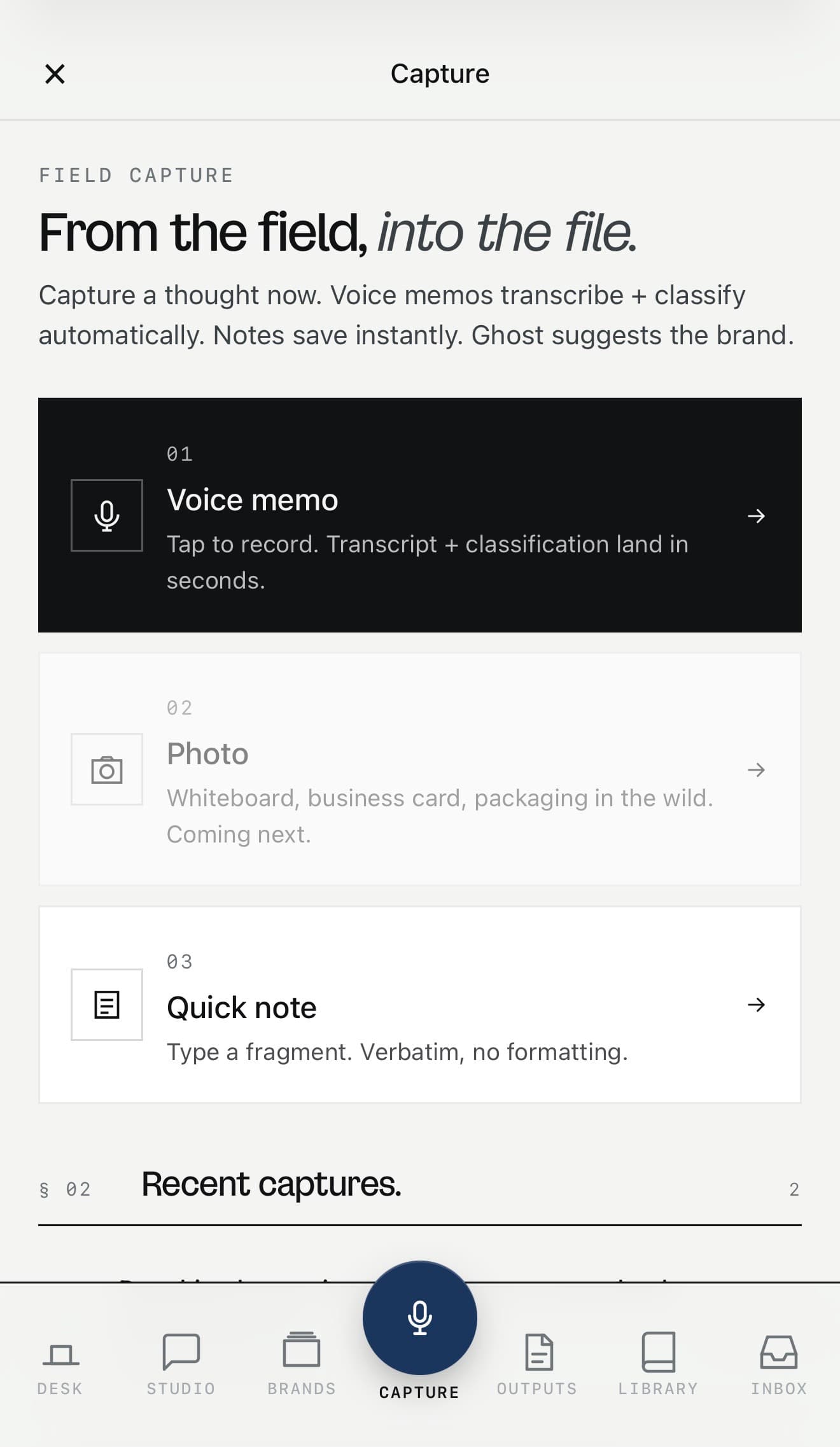
Between meetings, on the train, after the workshop — Ghost is in your pocket. Voice memos transcribe + classify in seconds. Quick notes save verbatim. Ghost auto-suggests which brand each capture belongs to.
Every engagement moves through the same six phases in the same order. The shape is what makes the work reviewable, teachable, and comparable across clients.
Discovery, stakeholder interviews, competitive map. The read.
Territories, positioning, the strategic bet. The choice.
Voice, message, behaviour, tagline. The words.
Stress-test the whole. The fit.
Launch narrative, internal playbook, rollout. The go.
Case study, canon, handoff. The record.
Every artefact ships in four formats — themed to the client's brand. The strategist picks the surface; Ghost ships the file.
PPTX · AI-authored, not templated
Ghost writes the deck code directly for each slide — layout reasoned, not stamped. Each one arrives in your client's palette, with their type, their grid.
PDF · canvas-design grade
The long-form strategy laid out with editorial discipline. Print-ready, brand-themed, citation-bearing — the document the boardroom reads.
HTML · interactive
A single-page strategy site, deliverable as a link. Skim-able, share-able, hosted under your domain or ours. The format their team will actually open.
Word · for circulation
The strategy as a working document — for legal, the in-house team, the partners. Track-changes friendly. The version that survives the email chain.
Ghost has been in closed beta at Angry Gods since March 2025, with a small outside cohort of senior brand strategists added through April 2026. As of today the door is shut — we're heads-down with the cohort through public launch.
The full application opens when Ghost launches publicly. If you'd like a heads-up the day it does, drop a note to hello@angrygods.com.